5G Smartphones in the UK: What They Are, Why They Matter, and Which One Should You Choose?

Introduction
Remember when 4G launched and suddenly your phone felt like a completely different device? Streaming HD video on the go, crystal-clear video calls, and near-instant page loads became completely normal within a few years. Well, 5G is the next chapter in that story — and it’s arriving in the UK faster than most people realise.
Yet despite 5G appearing prominently in nearly every mobile phone advert, there’s still a lot of genuine confusion among UK buyers. Is it worth upgrading for 5G right now? Will you even notice the difference day to day? Which networks have actually rolled it out properly? And which 5G phones offer the best value for money?
This guide cuts through the noise and gives you the clear, practical answers you need. By the end, you’ll know exactly whether a 5G smartphone deserves a place in your pocket — and if so, which one.
1. What Exactly Is 5G and How Does It Differ from 4G?
5G stands for fifth-generation mobile network technology. In practical terms, it means significantly faster download and upload speeds, lower latency (the delay between sending and receiving data), and the ability to handle far more connected devices simultaneously than the 4G networks we’ve been using since around 2012.
Here’s how the two generations broadly stack up:
Speed
4G average speeds in the UK typically land between 20–60 Mbps in real-world conditions. 5G, depending on the technology used and your location, can realistically deliver 100–300 Mbps in everyday use, with theoretical peaks far exceeding that. Downloading a full HD film that takes 5 minutes on 4G could complete in under 30 seconds on a strong 5G signal.
Latency
4G latency typically sits around 30–50ms. 5G targets sub-10ms latency, sometimes as low as 1ms. For most consumers this mainly matters for gaming and real-time applications, but it also underpins transformative future uses like remote surgery, autonomous vehicles, and augmented reality.
Capacity
5G networks can support exponentially more devices per square kilometre than 4G. This is what makes it genuinely transformative at a societal level — not just for individual smartphones, but for the Internet of Things, smart cities, and connected infrastructure.
2. How Good Is 5G Coverage Across the UK Right Now?
This is where things get genuinely nuanced. All four major UK networks — EE, Vodafone, O2, and Three — have launched 5G services, but coverage varies enormously depending on where you live.
• Major Cities: London, Manchester, Birmingham, Edinburgh, Glasgow, Bristol, Leeds, and Liverpool all have substantial 5G coverage across the four main networks. In central areas, you’re very likely to connect to 5G regularly.
• Suburban Areas: Coverage is patchy but expanding rapidly. You may switch between 5G and 4G depending on your precise location.
• Rural Areas: 5G availability is currently limited in most rural parts of the UK. If you live or spend significant time in the countryside, you’ll predominantly rely on 4G — and 5G is unlikely to materially change your experience for the foreseeable future.
The government has set targets for widespread 5G coverage by 2030, and rollout is genuinely accelerating. But the honest advice is: check coverage specifically for the postcodes where you actually spend time before making 5G a buying priority.
3. Should You Actually Buy a 5G Phone Right Now?
Here’s the straightforward answer: yes, if you’re buying a mid-range or premium smartphone in 2025, you should get a 5G handset — not necessarily because you’ll immediately feel the difference, but because of future-proofing.
Consider this: when people bought 4G phones in 2012, many of them didn’t have strong 4G coverage immediately. But by 2014–2015, they were enjoying significantly better speeds while friends with 3G-only devices were left behind. The same transition is happening with 5G right now.
The good news is that 5G is no longer the premium-only feature it was in 2020–2021. Budget smartphones starting at around £200 now include 5G capability, meaning there’s very little reason not to buy a 5G-enabled handset at virtually any price point today.
That said, if you’re on a very tight budget and considering a sub-£150 phone primarily for calls, texts, and light browsing, 4G remains perfectly adequate and may offer better value at that entry level.
4. Top 5G Smartphones Available in the UK in 2025
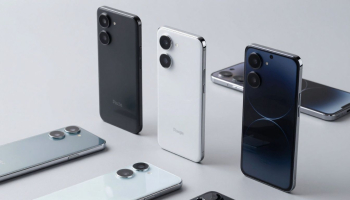
The UK market offers a strong range of 5G-capable devices across all budget levels. Here are standout options worth considering:
Premium Tier (£700+)
• Apple iPhone 16 Series: All models from the iPhone 16 onwards include 5G as standard. The iPhone 16 Pro Max remains the benchmark for photography and processing power.
• Samsung Galaxy S25 Ultra: Arguably the most powerful Android handset available in the UK, with exceptional AI features, S Pen stylus, and brilliant camera versatility.
• Google Pixel 9 Pro: Outstanding computational photography and the cleanest Android experience available, with seven years of guaranteed updates.
Mid-Range Tier (£300–£700)
• Samsung Galaxy A55: Exceptional value for money with a polished design, solid camera performance, and guaranteed software support for several years.
• Nothing Phone (2a): A refreshingly distinctive design with transparent rear panel elements, strong performance, and a growing cult following among tech enthusiasts.
Budget Tier (Under £300)
• Motorola Moto G84 5G: Superb battery life, a sharp AMOLED screen, and dependable performance at an accessible price point.
• Xiaomi Redmi Note 13 5G: Impressive specifications per pound spent, particularly for screen quality and fast charging speeds.
5. Does a 5G Phone Drain Battery Faster?
This is one of the most commonly asked questions — and the honest answer is: early 5G phones did suffer from meaningfully worse battery life when actively using 5G connectivity. However, modern 5G chipsets (particularly the Snapdragon 8 Gen 3, Apple A18, and recent Dimensity processors) have become dramatically more power efficient.
In practice, most current 5G smartphones manage a full day of typical use without difficulty. In areas where 5G coverage is unavailable, the phone simply drops to 4G automatically — you won’t notice the switch and it won’t rapidly deplete your battery.
If battery life is a top priority, look specifically for phones with large batteries (4,500 mAh or above) and efficient processors. The days of 5G meaning you need to carry a charging cable everywhere are largely behind us.
Conclusion: Is 5G the Right Move for You?
5G represents a genuine generational leap in mobile connectivity — and while coverage in parts of the UK is still maturing, the technology is becoming sufficiently widespread that buying a 5G smartphone now makes very strong sense for most people. You’re investing in a device that will remain relevant and capable for the next three to five years.
The most important advice? Don’t pay a significant premium solely for 5G capability — it’s now included across almost every phone category without a meaningful cost uplift. Focus instead on choosing the right device for your priorities: camera quality, battery endurance, software longevity, or display performance.
Keep checking MobilePhonesDeals.uk for the latest 5G phone promotions and contract comparisons — we make sure you never overpay on your next upgrade.
Are you already using a 5G phone, or still waiting to make the leap? Share your thoughts and questions in the comments — we’d genuinely love to know your experience.
Frequently Asked Questions (FAQs)
Q1. Do I need a special SIM card to use 5G in the UK?
No — standard UK SIM cards work with 5G networks. You simply need a 5G-compatible handset and a tariff from a network that has launched 5G services, such as EE, Vodafone, O2, or Three. Some older SIM cards may need to be reissued as nano-SIMs or eSIMs, but this is usually a straightforward free swap through your network.
Q2. Will a 5G phone work on a 4G network?
Absolutely. All 5G phones are fully backwards compatible with 4G (and 3G where still available). When your phone is outside 5G coverage, it seamlessly connects to the best available signal — usually 4G. You won’t lose functionality; you’ll simply connect at 4G speeds in those areas.
Q3. Is 5G safe to use? Are there any health concerns?
According to Public Health England (now the UK Health Security Agency) and the World Health Organisation, there is no scientific evidence that 5G technology poses any health risk at the levels used in commercial mobile networks. The radio frequencies used by 5G fall within the non-ionising part of the electromagnetic spectrum and are subject to strict international safety guidelines.
Q4. How much extra does a 5G plan cost compared to 4G in the UK?
Very little, and in many cases nothing at all. When 5G first launched in the UK, networks charged a significant premium for 5G-capable tariffs. Today, most major networks include 5G connectivity at no additional cost on mid-range and above plans. The technology has become standard rather than a paid upgrade.
Q5. What is the difference between sub-6GHz 5G and mmWave 5G?
Sub-6GHz 5G uses lower radio frequencies that travel further and penetrate buildings more effectively — this is the dominant form of 5G deployed across the UK and is what most consumers will experience. Millimetre wave (mmWave) 5G uses very high frequencies capable of extraordinary speeds but has extremely limited range and poor building penetration. mmWave deployments in the UK remain very limited and are primarily found in specific high-density venues rather than general consumer rollout.